CountryFrequency
Afghanistan50Hz
Albania50Hz
Algeria50Hz
Andorra50Hz
Angola50Hz
Argentina50Hz
Armenia50Hz
Australia50Hz
Austria50Hz
Azerbaijan50Hz
Azores50Hz
Bahrain50Hz
Balearic Islands50Hz
Bangladesh50Hz
Barbados50Hz
Belarus50Hz
Belgium50Hz
Benin50Hz
Bhutan50Hz
Bolivia50Hz
Bosnia50Hz
Botswana50Hz
Brunei50Hz
Bulgaria50Hz
Burkina Faso50Hz
Burundi50Hz
Cambodia50Hz
Cameroon50Hz
Canary Islands50Hz
Cape Verde50Hz
Central Africa50Hz
Chad50Hz
Channel Islands50Hz
Chile50Hz
China50Hz
Comoros50Hz
Congo (Zaire)50Hz
Cook Islands50Hz
Ivory Coast50Hz
Croatia50Hz
Cyprus50Hz
Czech Republic50Hz
Denmark50Hz
Djibouti50Hz
Dominica50Hz
East Timor50Hz
Egypt50Hz
Equatorial Guinea50Hz
Eritrea50Hz
Estonia50Hz
Ethiopia50Hz
Faeroe Islands50Hz
Falkland Islands50Hz
Fiji50Hz
Finland50Hz
France50Hz
French Guyana50Hz
Gaza50Hz
Gabon50Hz
Gambia50Hz
Germany50Hz
Ghana50Hz
Gibraltar50Hz
Greece50Hz
Greenland50Hz
Grenada50Hz
Guadeloupe50Hz
Guinea50Hz
Guinea-Bissau50Hz
Hong Kong50Hz
Hungary50Hz
Iceland50Hz
India50Hz
Indonesia50Hz
Iran50Hz
Iraq50Hz
Ireland50Hz
Isle of Man50Hz
Israel50Hz
Italy50Hz
Jamaica50Hz
Jordan50Hz
Kenya50Hz
Kazakhstan50Hz
Kiribati50Hz
Kuwait50Hz
Kyrgyzstan50Hz
Laos50Hz
Latvia50Hz
Lebanon50Hz
Lesotho50Hz
Liberia50Hz
Libya50Hz
Lithuania50Hz
Liechtenstein50Hz
Luxembourg50Hz
Macau50Hz
Macedonia50Hz
Madagascar50Hz
Madeira50Hz
Malawi50Hz
Malaysia50Hz
Maldives50Hz
Mali50Hz
Malta50Hz
Martinique50Hz
Mauritania50Hz
Mauritius50Hz
Moldova50Hz
Monaco50Hz
Mongolia50Hz
Morocco50Hz
Mozambique50Hz
Myanmar50Hz
Namibia50Hz
Nauru50Hz
Nepal50Hz
Netherlands50Hz
Netherlands Antilles50Hz
New Caledonia50Hz
New Zealand50Hz
Niger50Hz
Nigeria50Hz
Norway50Hz
Oman50Hz
Pakistan50Hz
Papua New Guinea50Hz
Paraguay50Hz
Poland50Hz
Portugal50Hz
Qatar50Hz
Réunion Island50Hz
Romania50Hz
Russian Federation50Hz
Rwanda50Hz
St. Lucia Island50Hz
St. Vincent Island50Hz
Senegal50Hz
Serbia & Montenegro50Hz
Seychelles50Hz
Sierra Leone50Hz
Singapore50Hz
Slovakia50Hz
Slovenia50Hz
Somalia50Hz
South Africa50Hz
Spain50Hz
Sri Lanka50Hz
Sudan50Hz
Swaziland50Hz
Sweden50Hz
Switzerland50Hz
Syria50Hz
Tajikistan50Hz
Tanzania50Hz
Thailand50Hz
Togo50Hz
Tonga50Hz
Tunisia50Hz
Turkey50Hz
Turkmenistan50Hz
Uganda50Hz
Ukraine50Hz
United Arab Emirates50Hz
United Kingdom50Hz
Uruguay50Hz
Uzbekistan50Hz
Vietnam50Hz
Western Samoa50Hz
Yemen50Hz
Zambia50Hz
American Samoa60Hz
Anguilla60Hz
Antigua60Hz
Aruba60Hz
Bahamas60Hz
Belize60Hz
Bermuda60Hz
Brazil60Hz
Canada60Hz
Cayman Islands60Hz
Colombia60Hz
Costa Rica60Hz
Cuba60Hz
Dominican Republic60Hz
Ecuador60Hz
El Salvador60Hz
Guam60Hz
Guatemala60Hz
Guyana60Hz
Haiti60Hz
Honduras60Hz
South Korea60Hz
Mexico60Hz
Micronesia60Hz
Montserrat Islands60Hz
Nicaragua60Hz
Okinawa60Hz
Palmyra Atoll60Hz
Panama60Hz
Peru60Hz
Philippines60Hz
Puerto Rico60Hz
St. Kitts & Nevis Islands60Hz
Saudi Arabia60Hz
Suriname60Hz
Tahiti60Hz
Taiwan60Hz
Trinidad & Tobago60Hz
United States (USA)60Hz
Venezuela60Hz
Virgin Islands60Hz

Electricity is the same around the globe, right? Well not quite, no! Different countries use different frequencies, which can be a real pain if you plan to use your equipment overseas.

In order to clear up the minefield that is power supply across the globe, we’ve put together the ultimate guide to international power frequencies; providing you with all the information you need to make informed decisions!

Why do different countries have different frequencies?

You might assume that the mains power supply would be the same wherever you go, but it simply isn’t the case. So who can you thank for this inconvenience? Well, it all dates back to the late 1880s when Thomas Edison and Nikola Tesla had conflicting ideas about bringing electricity into homes across New York.

Edison wanted to use Direct Current (DC), whereas Tesla proposed the use of Alternating Current (AC). Tesla declared the best frequency to use was 60Hz at 240 volts, whereas Edison relied on a lower voltage system of around 110 V.

Not wanting to lose out to his competitor, Edison spread his opinion that 240 volts was far too high for use in the home and many local residents agreed, believing it would be too dangerous. Edison’s scaremongering worked, though the decision ultimately went in Tesla’s favour, with New York adopting an AC supply at 110 volts and 60Hz.

Word soon spread and other countries began implementing their own mains power supply; however, companies in Europe, like BEW and AEG, controversially decided to go with 50Hz rather than 60Hz. Neighbouring countries followed suit and before you knew it this 50Hz design had been accepted across the continent.

So, we’ve now got the US running their power supply at 60Hz and the majority of Europe using 50Hz – but it doesn’t end there… To further complicate things, countries like Britain, Spain, France, Portugal, etc. then began implementing their 60Hz power supply systems in their colonies across Asia and Africa.

As no international standard was ever set, countries stuck to their initial frequencies and here we are over 100 years later!

Worldwide Frequencies

Now we know why countries have differing frequencies, let’s break it down and examine the frequencies of each country.

50Hz vs 60Hz Countries

The two main power frequencies used across the globe are 50Hz or 60Hz (Hertz), and the majority of countries favour a 50Hz frequency for their mains supply, though there are still a significant number of countries using a 60Hz supply.

So, which countries use 60Hz? Take a look at the table below to discover more.

FrequencyCountry
60HzAmerican Samoa, Anguilla, Antigua, Aruba, Bahamas, Belize, Bermuda, Brazil, Canada, Cayman Islands, Colombia, Costa Rica, Cuba, Dominican Republic, Ecuador, El Salvador, Guam, Guatemala, Guyana, Haiti, Honduras, South Korea, Mexico, Micronesia, Montserrat Islands, Nicaragua, Okinawa, Palmyra Atoll, Panama, Peru, Philippines, Puerto Rico, St. Kitts & Nevis Islands, Saudi Arabia, Suriname, Tahiti, Taiwan, Trinidad & Tobago, United States (USA), Venezuela, Virgin Islands
50HzAfghanistan, Albania, Algeria, Andorra, Angola, Argentina, Armenia, Australia, Austria, Azerbaijan, Azores, Bahrain, Balearic Islands, Bangladesh, Barbados, Belarus, Belgium, Benin, Bhutan, Bolivia, Bosnia, Botswana, Brunei, Bulgaria, Burkina Faso, Burundi, Cambodia, Cameroon, Canary Islands, Cape Verde, Central Africa, Chad, Channel Islands, Chile, China, Comoros, Congo (Zaire), Cook Islands, Ivory Coast, Croatia, Cyprus, Czech Republic, Denmark, Djibouti, Dominica, East Timor, Egypt, Equatorial Guinea, Eritrea, Estonia, Ethiopia, Faeroe Islands, Falkland Islands, Fiji, Finland, France, French Guyana, Gaza, Gabon, Gambia, Germany, Ghana, Gibraltar, Greece, Greenland, Grenada, Guadeloupe, Guinea, Guinea-Bissau, Hong Kong, Hungary, Iceland, India, Indonesia, Iran, Iraq, Ireland, Isle of Man, Israel, Italy, Jamaica, Jordan, Kenya, Kazakhstan, Kiribati, Kuwait, Kyrgyzstan, Laos, Latvia, Lebanon, Lesotho, Liberia, Libya, Lithuania, Liechtenstein, Luxembourg, Macau, Macedonia, Madagascar, Madeira, Malawi, Malaysia, Maldives, Mali, Malta, Martinique, Mauritania, Mauritius, Moldova, Monaco, Mongolia, Morocco, Mozambique, Myanmar, Namibia, Nauru, Nepal, Netherlands,Netherlands Antilles, New Caledonia, New Zealand, Niger, Nigeria, Norway, Oman, Pakistan, Papua New Guinea, Paraguay, Poland, Portugal, Qatar, Réunion Island, Romania, Russian Federation, Rwanda, St. Lucia Island, St. Vincent Island, Senegal, Serbia & Montenegro, Seychelles, Sierra Leone, Singapore, Slovakia, Slovenia, Somalia, South Africa, Spain, Sri Lanka, Sudan, Swaziland, Sweden, Switzerland, Syria, Tajikistan, Tanzania, Thailand, Togo, Tonga, Tunisia, Turkey, Turkmenistan, Uganda, Ukraine, United Arab Emirates, United Kingdom, Uruguay, Uzbekistan, Vietnam, Western Samoa, Yemen, Zambia

Interestingly, the frequency in Japan isn’t even uniform across the country! Areas in the east, like Tokyo, operate on 50Hz, whereas areas in the west like Osaka and Kyoto use a 60Hz power supply.

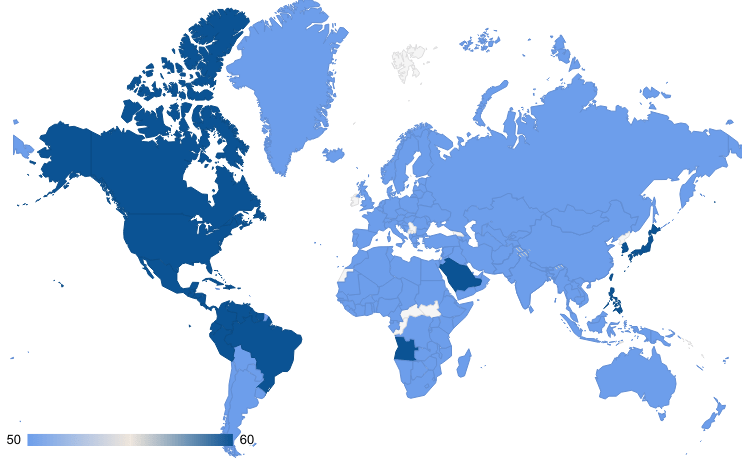
The image below shows countries that have a power frequency of 50Hz in light blue and 60Hz in dark blue.

Why do we need to regulate power frequency?

So you might be wondering, well why does it matter if a country uses 50Hz or 60Hz? There are a number of reasons why the frequency of a mains supply is regulated, but the main one is to prevent damaging equipment or infrastructure.

All equipment will be designed for use in a specific country, and so manufacturers will create their products to run at the correct frequency for the country they’re being sold or used in. If you’re in the UK, pretty much everything you use every day (if it connects to mains power), will be designed to operate at 50Hz. If the power frequency differs too far from 50Hz, it can cause serious damage to your equipment.

Regulating the frequency of national power supplies is therefore vital to protect equipment and infrastructure across the country.

Importance of Frequency Converters

When travelling overseas you’re likely to come across a mains supply that is different from your home country. Unfortunately, this means that you won’t be able to utilise equipment that requires a 60Hz power supply in a country that runs a 50Hz power supply. Running equipment at the wrong frequency can severely damage it; which is where frequency converters come into play…

Our range of frequency converters can transform 50Hz to 60Hz and 60Hz to 50Hz to suit all countries. This means that you can then safely run your equipment with the exact amount of power required as efficiently as possible without the risk of damaging it or severely decreasing the lifespan of your equipment.

Want to learn more about frequency converters? Get in touch with our power conversion experts at PSI today! A member of the team will be happy to assist you with any questions you may have; simply call 01494871544 or email us at info@powersystemsinternational.com today.

Useful information

Which countries operate on a 50Hz power frequency?

Afghanistan, Albania, Algeria, Andorra, Angola, Argentina, Armenia, Australia, Austria, Azerbaijan, Azores, Bahrain, Balearic Islands, Bangladesh, Barbados, Belarus, Belgium, Benin, Bhutan, Bolivia, Bosnia, Botswana, Brunei, Bulgaria, Burkina Faso, Burundi, Cambodia, Cameroon, Canary Islands, Cape Verde, Central Africa, Chad, Channel Islands, Chile, China, Comoros, Congo (Zaire), Cook Islands, Ivory Coast, Croatia, Cyprus, Czech Republic, Denmark, Djibouti, Dominica, East Timor, Egypt, Equatorial Guinea, Eritrea, Estonia, Ethiopia, Faeroe Islands, Falkland Islands, Fiji, Finland, France, French Guyana, Gaza, Gabon, Gambia, Germany, Ghana, Gibraltar, Greece, Greenland, Grenada, Guadeloupe, Guinea, Guinea-Bissau, Hong Kong, Hungary, Iceland, India, Indonesia, Iran, Iraq, Ireland, Isle of Man, Israel, Italy, Jamaica, Jordan, Kenya, Kazakhstan, Kiribati, Kuwait, Kyrgyzstan, Laos, Latvia, Lebanon, Lesotho, Liberia, Libya, Lithuania, Liechtenstein, Luxembourg, Macau, Macedonia, Madagascar, Madeira, Malawi, Malaysia, Maldives, Mali, Malta, Martinique, Mauritania, Mauritius, Moldova, Monaco, Mongolia, Morocco, Mozambique, Myanmar, Namibia, Nauru, Nepal, Netherlands,Netherlands Antilles, New Caledonia, New Zealand, Niger, Nigeria, Norway, Oman, Pakistan, Papua New Guinea, Paraguay, Poland, Portugal, Qatar, Réunion Island, Romania, Russian Federation, Rwanda, St. Lucia Island, St. Vincent Island, Senegal, Serbia & Montenegro, Seychelles, Sierra Leone, Singapore, Slovakia, Slovenia, Somalia, South Africa, Spain, Sri Lanka, Sudan, Swaziland, Sweden, Switzerland, Syria, Tajikistan, Tanzania, Thailand, Togo, Tonga, Tunisia, Turkey, Turkmenistan, Uganda, Ukraine, United Arab Emirates, United Kingdom, Uruguay, Uzbekistan, Vietnam, Western Samoa, Yemen, Zambia

Which countries operate on a 60Hz power frequency?

American Samoa, Anguilla, Antigua, Aruba, Bahamas, Belize, Bermuda, Brazil, Canada, Cayman Islands, Colombia, Costa Rica, Cuba, Dominican Republic, Ecuador, El Salvador, Guam, Guatemala, Guyana, Haiti, Honduras, South Korea, Mexico, Micronesia, Montserrat Islands, Nicaragua, Okinawa, Palmyra Atoll, Panama, Peru, Philippines, Puerto Rico, St. Kitts & Nevis Islands, Saudi Arabia, Suriname, Tahiti, Taiwan, Trinidad & Tobago, United States (USA), Venezuela, Virgin Islands